
Value oriented
To obtain competitive overall value across the supply chain.
Sustainability
SDGs
Overview
As a global leader in semiconductor assembly and testing services, ASE collaborates with many suppliers around the world. We actively participate in industry organizations and commit to initiatives aligned with our core business and sustainable development. In 2017, ASE co-founded the Taiwan Alliance for Sustainable Supply (TASS) to create a platform that promotes sustainable supply, the circular economy, and the integration of supply management, logistics and information exchange.
Supply chain management strategy
To obtain competitive overall value across the supply chain.

To maintain at least two suppliers for the same material and ensure continuous supply.

To obtain the best-quality products and services from suppliers.

To integrate suppliers' resources and capabilities for greater innovation.

To raise suppliers' economic, environmental and social sustainability performance.

To ensure suppliers use only responsibly sourced, conflict-free minerals.
Risk investigation & assessment
We conduct an annual three-step supplier sustainability risk evaluation. Tier 1 suppliers complete a questionnaire covering regulatory compliance, continuous operation management, conflict mineral management, environmental protection, health and safety, and labor rights. Non-performing suppliers are guided on areas to improve and are monitored, while outstanding suppliers are recognized — since 2017 through the ASE Supplier Sustainability Awards.


E-supply chain collaboration
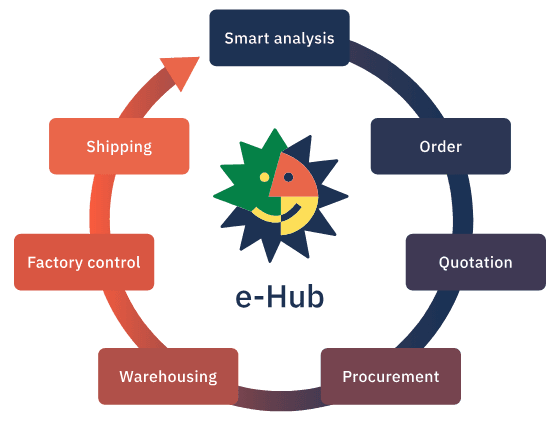
ASE launched the e-Hub in 2010 — a platform for real-time information exchange that keeps the supply chain agile and eliminates the bullwhip effect. Buyers and suppliers execute requests for quotations, respond to purchase orders and send shipping notices online; suppliers upload real-time WIP (work-in-process) inventory data; and B2B information exchange supports MRP so we can analyze material demand and supply risks and run a comprehensive inventory against customer demand.
Sustainability projects
In 2020 we launched a program encouraging suppliers to submit 1–3 year sustainability projects with low-carbon and circularity goals, to stimulate innovative collaboration and deepen partnerships. For 2023, we selected one winner each in "Low Carbon" and "Circular," with independent on-site audits in 2024 and 2025 to verify progress and disburse sponsorship fees.
| Sustainable Strategies | Selected Suppliers | Collaboration Project | Expected Benefits |
|---|---|---|---|
| Low Carbon | Hwa Shu Enterprise Co., Ltd. | Introduction of energy-saving electric heating system |
|
| Circular | Chiu Tze Chemical Co., Ltd. | Waste liquid recycling and reuse |
|
Social influence
We use RBA Self-Assessment Questionnaires (SAQs) to identify labor, environmental and ethical risks, and apply them to the sustainable management of our supply chain — ensuring compliance with workplace safety, labor rights, environmental protection and ethics.
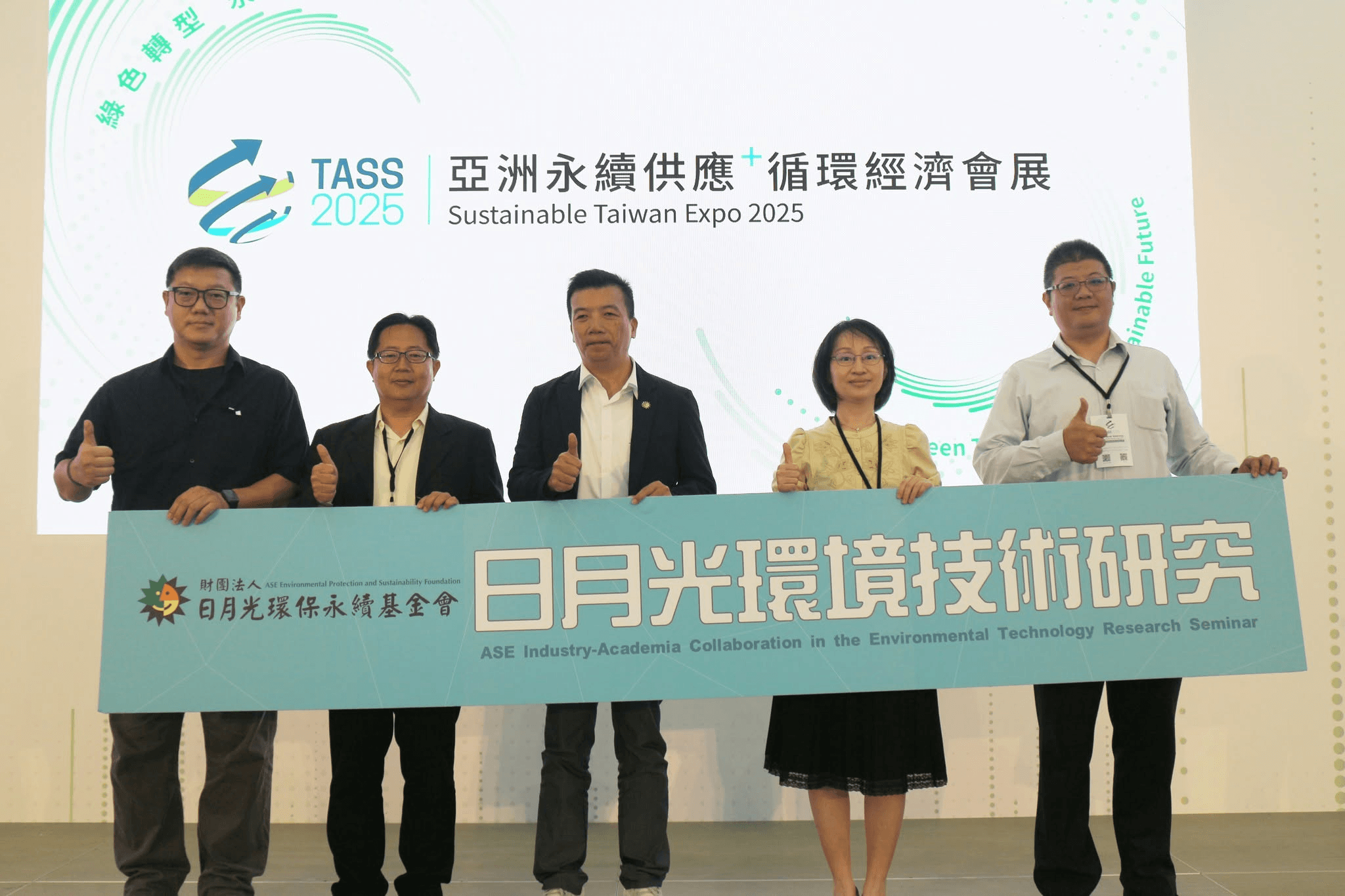
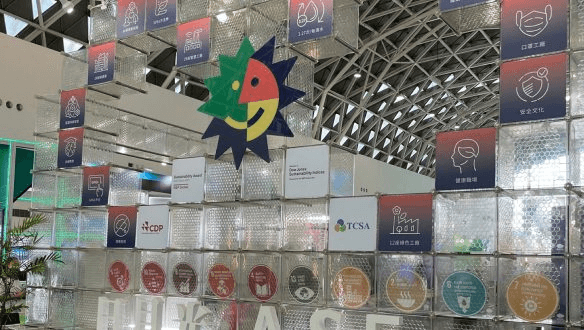
Established in 2017 as a platform integrating government, academia and business to accelerate a circular economy. ASE supported the first TASS 2020 event — 10 forum tracks, 80 matchmaking sessions and 350+ booths — and in 2023 used the "sustainable lighthouse" imagery to share net-zero actions and raise awareness.