Real-time data
5G moves data across the floor at high speed and very low delay, so machines and systems stay in sync.

A smart factory depends on moving large amounts of data instantly and reliably. Ordinary networks struggle with that at scale, which is where 5G comes in.
5G moves data across the floor at high speed and very low delay, so machines and systems stay in sync.
That fast, steady connection lets AI and big-data analytics run on live production data, not after the fact.
The result is more flexible operations, better predictive maintenance, and higher output.
ASE's network uses a specific combination of 5G technologies. Here is what each part means and why it was chosen.
5G New Radio (NR) is the global standard for 5G's air interface. It runs on mid-band frequencies below 6 GHz and on high-band millimeter wave (mmWave) frequencies from 24 to 52 GHz; Taiwan's mmWave uses 28 GHz. NR Dual Connectivity (NR-DC) connects equipment to both bands at the same time for more speed and coverage.
Combining mid-band and mmWave gives low latency, high reliability, and very high speed. That mix suits factory automation, remote monitoring, and autonomous robots.
The factory uses Qualcomm's Snapdragon X65 5G Modem-RF System with NR-DC software. By combining four 100 MHz carriers across the 2.6 GHz and 28 GHz bands (uplink four-carrier aggregation), it reaches an uplink speed of 600 Mbps.
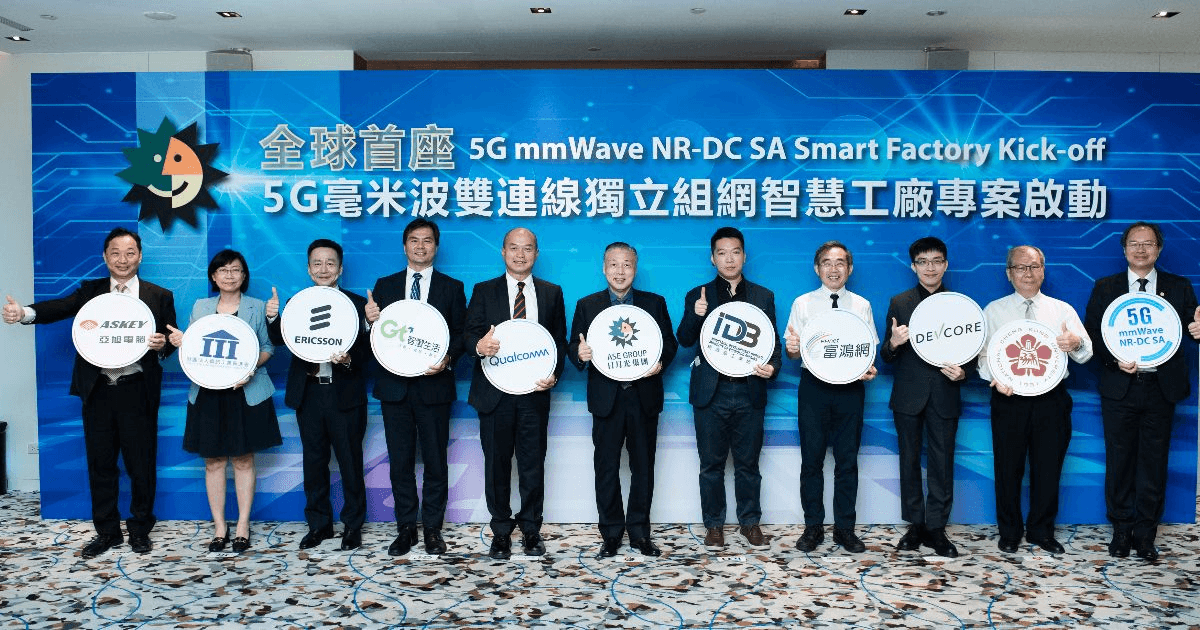
In 2022, ASE announced a 5G mmWave NR-DC SA smart factory at its flagship Kaohsiung campus, built with five partners. The aim is a secure, reliable digital makeover of the factory, achieved by tying together three things: the 5G wireless network, the smart equipment on the floor, and OT (operational technology) security.





AI spots deviations from the standard operating procedure, helping staff keep yield quality and a safe working environment.
Analyzing data from current and newly added equipment to raise productivity and fine-tune process parameters.
Real-time inventory forecasting from delivery to the line, which cuts overall production cycle time.

High-bandwidth streaming delivers high-resolution inspection images in real time, improving accuracy and speed.

Stable, fast 5G shortens setup time when machines are re-arranged, improving overall equipment efficiency (OEE).

Protecting the reliability and safety of machines and tasks in a digitized manufacturing environment.
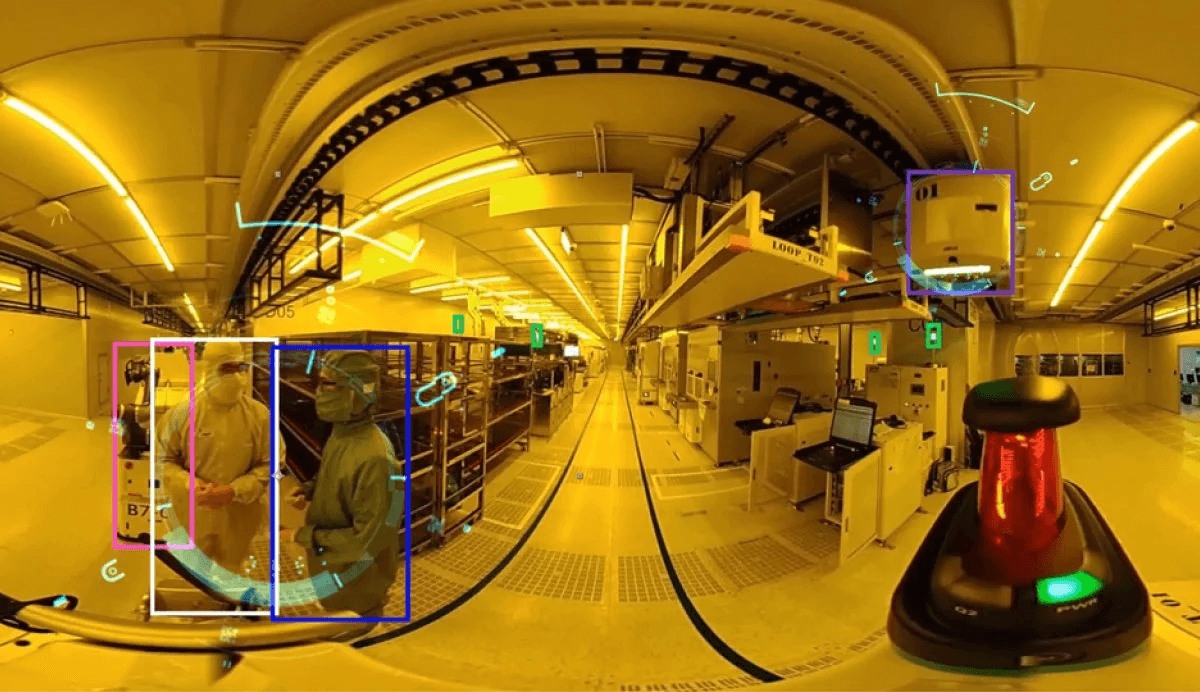
Cameras on self-driving vehicles, paired with AI analysis, take over routine line inspection from people. 5G mmWave gives the wide, low-latency coverage that Wi-Fi cannot, so the vehicles move freely around the floor.
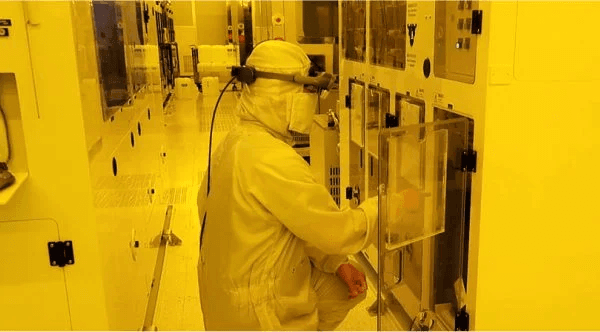
Engineers diagnose and service equipment from a central control room using augmented reality. 5G streams the high-resolution images in real time, so they can adjust on the spot and bring in colleagues from other sites.

At ASE's Green Technology Education Center, visitors explore the company's water-recycling work through an AR experience running on the private 5G mmWave network.